As we age, our bodies become more sensitive to metabolic imbalances. Hormonal and metabolic health are deeply interconnected — even when hormones are optimized, poor metabolic health limits the benefits. The foundation is consistent daily habits: hydration, breathing, sleep, movement, nutrition, stress reduction, and hormonal balance.

Hydration
Hormones are chemical messengers that are integral to everything related to our bodies functioning. They coordinate the body's timing, energy use, temperature, mood regulation, reproductive function, and healing. Key players include estrogen and progesterone (cycle, ovulation, uterine lining, bone protection), thyroid hormones T3/T4 (metabolism, energy, hair/skin, etc), insulin (blood sugar storage and use), and cortisol (stress response, inflammation control, sleep-wake rhythm). When one system is strained, it can affect the balance of the others.
Breathwork
Deep diaphragmatic breathing activates the parasympathetic state — lowering heart rate, cortisol, and blood pressure while increasing lymphatic flow. Nasal breathing, especially during sleep, boosts nitric oxide (NO), supporting cardiovascular and immune health, blood pressure, and sleep quality.
Note: Antibacterial mouthwash can destroy oral bacteria that convert nitrates to nitric oxide. Try nasal-breathing strategies at night; approach mouth taping cautiously, as it carries risks for those with sleep apnea or nasal congestion.
Sleep
Sleep and metabolism are tightly linked: sleeping fewer than six hours nightly drives higher calorie intake and cravings for high-sugar, inflammatory foods. Nothing replaces the benefits0pof quality sleep.
REM sleep: appears about 90 minutes after falling asleep and recurs in cycles. It is brain-restorative — supporting memory consolidation and emotional regulation.
Non-REM sleep: body-restorative, in three stages — light (N1), deeper (N2), and deep / slow-wave (N3) — supporting immune function, tissue repair, and hormone release.
Melatonin: Declines with age. Sublingual forms aid sleep onset; extended-release supports maintenance. Support it naturally with a consistent schedule, no bedroom screens, no food 2–3 hours before bed, and minimal blue light in the hour before sleep.
Movement & Strength
Resistance training plus moderate aerobic exercise is one of the most powerful metabolic tools. Muscle is metabolically active — more muscle means more efficient fuel burning, glucose regulation, and insulin management. This matters especially during and after menopause, when muscle loss accelerates and metabolism slows. Strength training isn't optional here — it's medicine. Find something you enjoy so you'll stick with it; there is an activity for everyone.
Nutrition
Eatmindfully. Sit, eat slowly, and chew thoroughly to activate your “rest and digest” state. Avoid large amounts of fluid with meals, which can dilute digestive enzymes.
Intermittent fasting: the evidence is genuinely mixed — some metabolic benefits, but concerns about cardiovascular risk and muscle-mass loss, both relevant for menopausal women. Research carefully and discuss with your provider before adopting it.
Protein: protein at every meal — especially breakfast — is strongly supported.
Stress Reduction
Chronic stress is damaging and underestimated. Elevated cortisol promotes visceral fat, raises blood glucose, increases insulin resistance, disrupts sleep, and suppresses thyroid function — creating a metabolic environment no diet or exercise can fully overcome.
Stress reduction is not a lifestyle luxury — it is a metabolic necessity.
Parasympathetic practices — diaphragmatic breathing, walking or yoga, time in nature, meditation, and meaningful connection — measurably lower cortisol. The goal is not to eliminate stress, but to return daily to a calmer baseline where healing, hormonal balance, and metabolic efficiency can occur.
Metabolic Syndrome
A cluster of interrelated risk factors that raise the risk of cardiovascular disease, diabetes, and stroke. It is diagnosed when three or more of the following are present:
Waist circumference greater than 35 inches (women)
Triglycerides 150 mg/dL or greater
HDL cholesterol less than 50 mg/dL (women)
Fasting blood glucose 100 mg/dL or greater
Blood pressure 130/85 mmHg or higher
It is the end result of years of cumulative imbalance — which is precisely why daily habits matter so much.
Potential Lab Work to Discuss with Your Provider
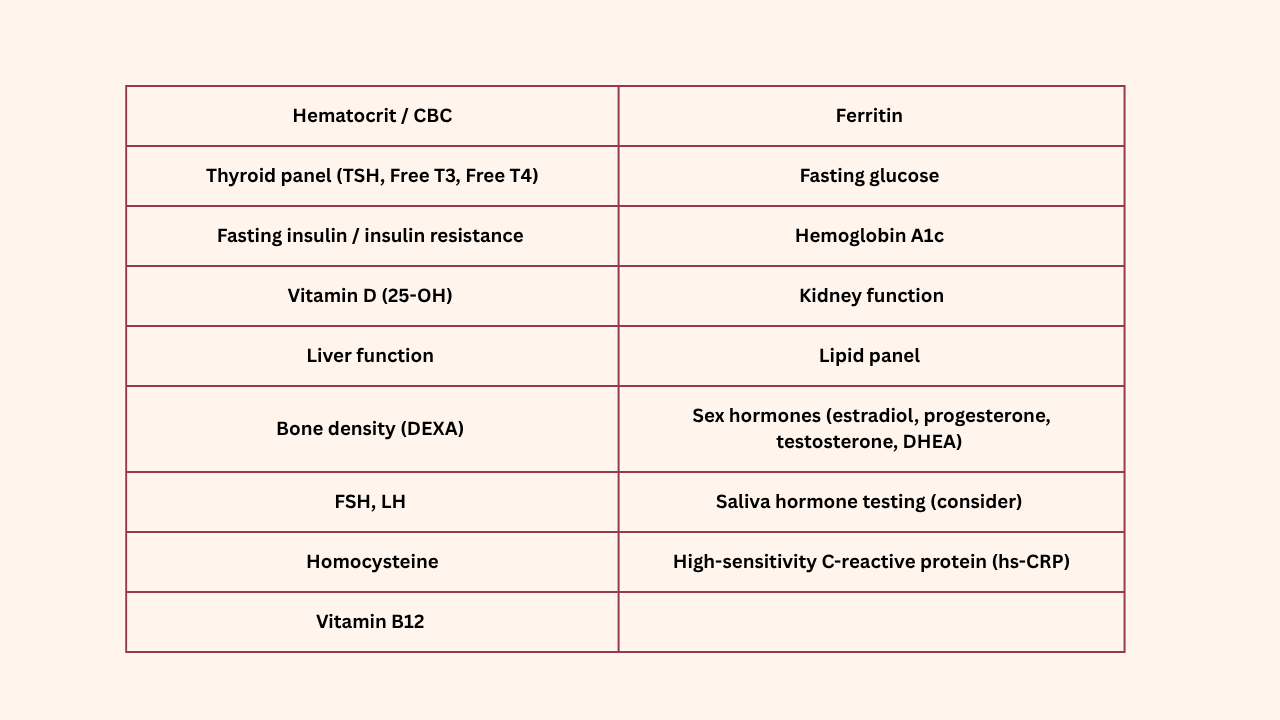
For educational purposes only; this does not replace individualized medical advice. Please discuss with your provider.
